Research needs faster iteration, so we built SilicoLabs, not more ideas.
Founded in 2024 in Toronto, SilicoLabs links a scientific hypothesis to the simulation result used to test it.
The challenge we address
Drug discovery and protein engineering often occur without a dedicated computational chemist or bioinformatician. When a researcher has an in-silico hypothesis to test, the choices are to set up and run the computation yourself, spending weeks getting up to speed; submit it to a core facility and wait weeks in line; or abandon computational validation and synthesize without it.
Each path has a cost. Synthesis first spends reagent budget on candidates that a 10-hour simulation would have deprioritized. Core-facility queues add six weeks to a research cycle, while DIY computation becomes a full-time job.
SilicoLabs handles the middle layer: its agent reads a scientific question in natural language, selects and configures the right computational method, runs the job on distributed compute, checks convergence, and returns results a biologist can read and use. No installation, parameter tuning, or queue.
Team

Benjamin
CEO, Co-Founder
Before founding SilicoLabs, Benjamin spent years creating computational modeling workflows with wet-lab drug discovery teams. Serving as the link between biologists with hypotheses and computing resources requiring specialist setup, he saw promising science repeatedly slow at the compute bottleneck. SilicoLabs came from the tool he kept wishing someone had built.
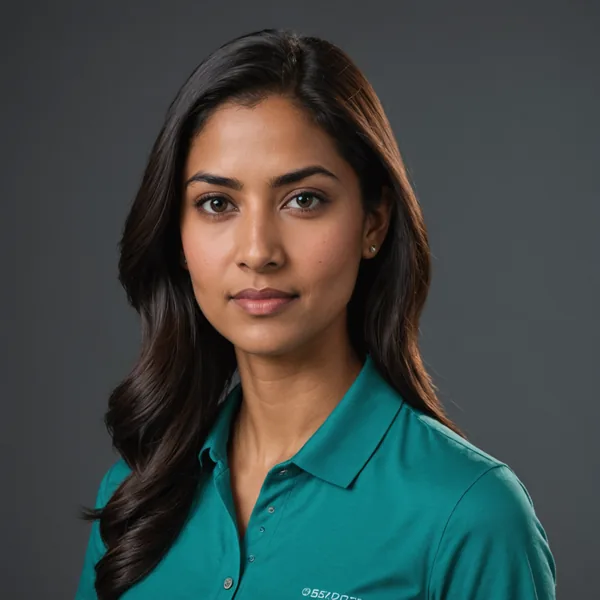
Priya Mehra
CTO, Co-Founder
Priya has built infrastructure for distributed simulation workloads throughout her career, specializing in high-performance computing and molecular modeling pipelines. She created SilicoLabs' orchestration layer and the systems that scale jobs across distributed compute without manual resource allocation. Priya also guides the technical direction for each new method we introduce.
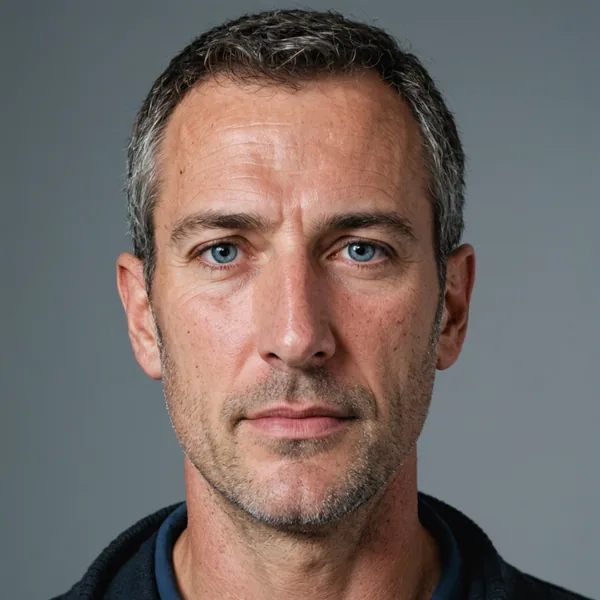
Marcus Vogt
Computational Science Lead
Marcus brings expertise in bioinformatics and structural biology, with years of designing in-silico experiment protocols for drug-discovery research groups. He converts scientific intent into simulation parameters that SilicoLabs configures automatically, while maintaining the accuracy and reproducibility of every method the platform supports.
Funding milestones
2024
SilicoLabs incorporated in Toronto. First internal molecular dynamics pipeline deployed. Initial research advisors from the life sciences computing community joined.
2025
Raised $1.5M in an angel round from deep tech investors in Toronto's biotech ecosystem. Added protein-ligand docking, DFT, and ADMET simulation support. First external research teams joined through pilot access.
2026
Waitlist-based early access opened. Teams from academic labs and pre-clinical biotech groups ran production simulations. MaRS Centre residency at 661 University Avenue, Toronto.
Located at MaRS Centre, Toronto
SilicoLabs operates from MaRS Centre at 661 University Avenue, in the heart of Toronto's health sciences and biotech corridor. The building hosts academic medical research institutes, biotech startups, and clinical partners, keeping us close to the teams we build for.
MaRS Centre, 661 University AvenueToronto, Ontario M5H 2N2, Canada
[email protected]
+1 416 597 4820