Use Cases

How teams use SilicoLabs

From early drug discovery through protein engineering, in-silico experiments that once required weeks of setup now run overnight.

Drug Discovery

Compare compound candidates overnight

Early drug discovery involves searching broad chemical spaces with limited compute and no dedicated computational chemistry staff. With plain-language instructions, wet-lab biologists can ask SilicoLabs to compare candidates and receive docking scores plus binding energy estimates by morning.

Run up to 500 compound variants in one job. Compare wild-type and mutant receptor binding, evaluate scaffold changes side by side, and receive ranked candidate lists with interaction fingerprints for each.

  • Dock proteins against large compound libraries
  • MM-GBSA binding free energy
  • Automatic PDB retrieval and structure preparation
  • Binding poses (PDB, SDF)
Get drug discovery access
Molecular view of a compound docked in a protein binding site
Protein Engineering

Assess mutations and stability before synthesis

Improving protein thermostability, binding specificity, or activity depends on knowing how sequence changes influence structure and dynamics. Performing these analyses in-silico before synthesis helps conserve cycles and reagents.

SilicoLabs runs molecular dynamics trajectories for several sequence variants in parallel, returning RMSD, RMSF, and comparative stability metrics for each candidate. Teams report that this helps them prioritize the two or three variants most worth ordering.

  • MD runs for wild-type and mutant variants
  • Per-residue RMSF flexibility profiling
  • Comparative free-energy perturbation
  • AlphaFold structure support
Get protein engineering access
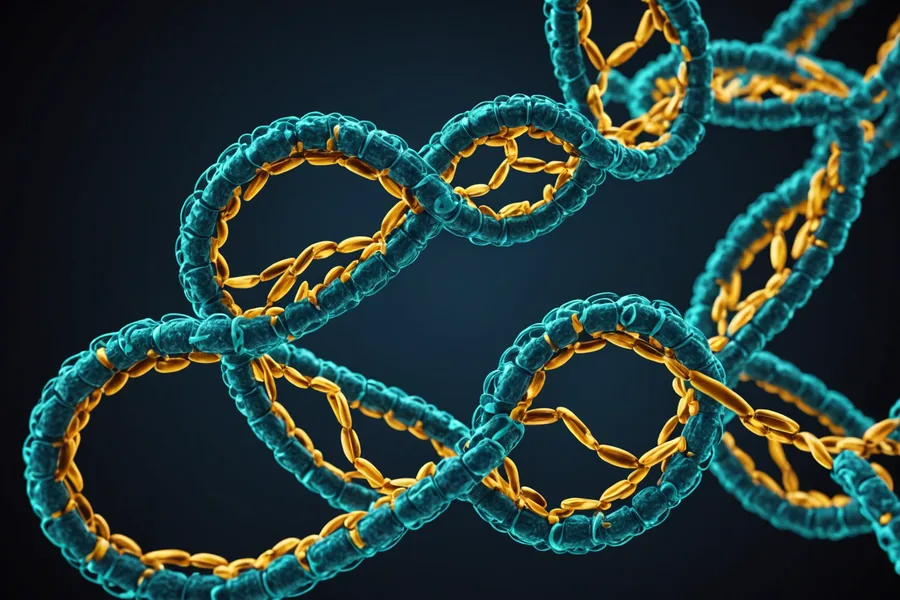
Abstract ribbon diagram of a protein structure for molecular engineering
ADMET Screening

Screen early for toxicity and metabolic liabilities

Toxicity and poor pharmacokinetics can make late-stage attrition expensive. SilicoLabs includes ADMET property predictions in the initial screening workflow, flagging high-liability molecules before further optimization consumes time.

Predicted properties cover logP, solubility, hERG inhibition risk, cytochrome P450 inhibition profile, and BBB penetrance. A structured table reports flagged values beside docking and binding energy results.

  • ADMET predictions across screened compounds
  • hERG and CYP450 risk flags
  • Lipinski Ro5 and lead-likeness filters
  • Binding energy results in integrated reports
Get ADMET screening access
Reaction Chemistry

Computationally predict pathways and transition states

Medicinal and synthetic chemists developing novel scaffolds can examine electronic structure before selecting synthetic routes. DFT geometry optimization, transition state searches, and frontier orbital analysis inform planning without requiring quantum chemistry expertise.

SilicoLabs selects the basis set and functional for the system type, optimizes geometry to convergence, and includes thermochemical data, orbital energies, and electrostatic potential maps in the output package.

  • Geometry optimization and conformer searching
  • Transition state finding and IRC tracing
  • Thermochemistry: enthalpy, entropy, Gibbs energy
  • Electrostatic maps and frontier orbital analysis
Get reaction chemistry access

Begin with your team's current question.