Every research lead faces the choice: synthesize the next candidate batch and run binding assays, or spend more time computing first? Most teams have defaulted to synthesis because the wet lab is familiar, protocols are established, and a compound in a vial feels tangible. Less obvious is the true cost, in calendar time, technician hours, and reagents per compound.
This note presents a concrete comparison based on early-access projects: eight to twelve candidates, one protein target with a known structure, and a team of three to five people dividing time among multiple projects.
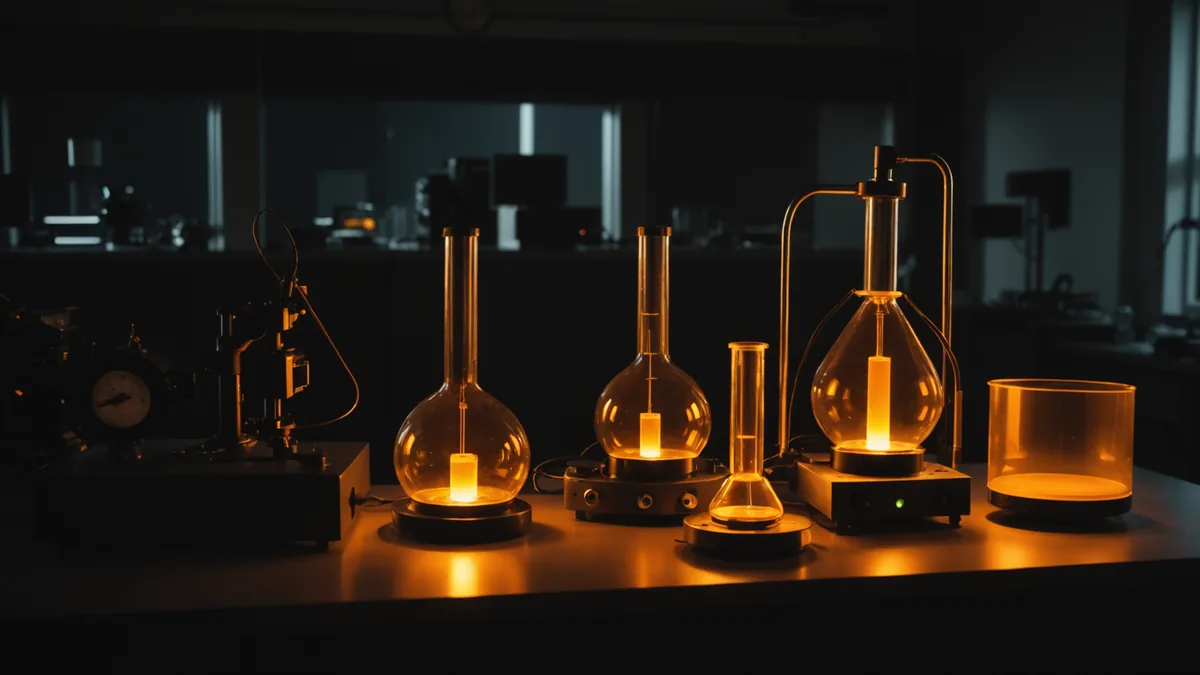
What a three-week wet lab cycle includes
Synthesizing candidate compounds before binding tests creates more calendar overhead than planning often suggests. Custom synthesis of a novel small molecule with a few steps typically takes five to ten business days, assuming no route failures. A failed route that needs redesign adds another week. Purification, characterization, and quality checks add two to three days before testing can begin.
The binding assay, whether SPR, ITC, or a fluorescence-based competitive assay, needs dedicated instrument time, often booked one to two weeks ahead at shared facilities. Thus, from "we want to test these eight compounds" to "we have binding data" takes four to five weeks when queue time and occasional synthesis failures are included.
Contract synthesis generally costs $800 to $2,500 per compound, depending on complexity. In-house work lowers cash spending but shifts cost to technician time. At a loaded hourly rate of $60 to $90 for a postdoc or research associate, that cost rises quickly across eight compounds. Assay consumables, including antibodies, protein, buffer, and plates, add $150 to $400 per compound. A twelve-compound set can cost $15,000 to $30,000 before any binding result is available.
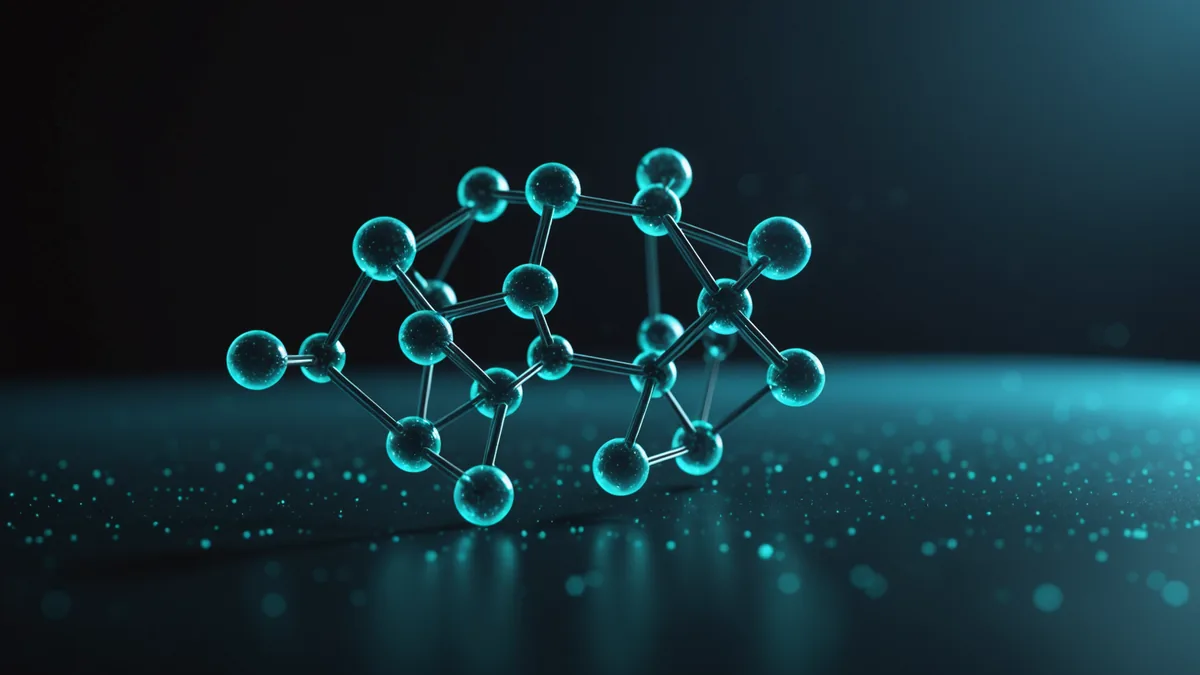
What the computational screen covers in the same period
A docking screen for the same twelve compounds, submitted to a simulation agent Monday afternoon, returns ranked poses and estimated binding scores by Tuesday morning. An expanded library of 400 to 500 variants built around those twelve scaffolds covers much more chemical space in the same overnight run.
Computational screening costs roughly $2 to $15 per compound, depending on method and run time, with docking cheaper and free-energy perturbation methods more expensive. Its key output is a ranked list. If eight of twelve compounds show no plausible pose, you know before buying a gram of starting material.
The useful comparison is not "simulation cost versus assay cost," but "simulation cost versus compounds that would have failed the assay." In early-access pilot workflows, roughly 40 to 60 percent of a synthesis batch can be deprioritized from docking alone, before physical chemistry. That is a substantial share of the $15,000 to $30,000 total above.
Where the comparison becomes more complex
Docking scores are not binding affinities. A compound scoring well with a rigid receptor may still fail because the simulated receptor conformation is not physiologically relevant, or because the scoring function misses desolvation penalties for that scaffold. The comparison applies to filtering clear non-binders and geometrically clashing scaffolds. It does not reliably rank compounds whose scores fall within a narrow range.
When two compounds have reasonable poses and similar estimated binding energies, computation does not reliably choose between them. You still need the assay. The in-silico step is valuable for removing obvious failures early, not for replacing assays for promising candidates.
Per-compound comparisons also hide setup costs. A sound docking screen needs a validated protein structure, careful ligand preparation, protonation-state assignment, conformer generation, and a defensible binding-site definition. Poor inputs make ranked results untrustworthy, however fast the run. For a reasonably clean target, setup takes two to four hours and is not repeated for each screen after validation.
How teams use this in practice
Research leads using a computation-first step are not replacing wet lab programs. They are changing the order. A typical workflow defines a scaffold series from the medicinal chemistry team's ideas, screens 200 to 500 variants, sends the top 15 to 20 by docking score through a rapid ADMET filter, and synthesizes the eight to ten survivors. Binding assays then test a set that has passed computational screening, rather than the full untested set.
The synthesis queue becomes shorter, and assay hit rates tend to rise. Time to first good binding data may not shrink because computation adds a day or two at the front. However, fewer synthesis failures and blank assays improve both morale and budget position.
What this comparison does not say
This is not a claim that synthesis is wasteful or wet lab biology can be replaced. SPR or ITC data provides information no docking score can: exact Kd, binding stoichiometry, assay-format artifacts, and compound aggregation. Simulation does not produce or replace these results.
The narrower point is that, for front-end filtering in a synthesis campaign, computing first and synthesizing second is usually more resource-efficient. The cost difference is substantial. Teams are really asking how much overhead computation adds. With suitable tooling, it is one to two days of setup plus one overnight run. Without it, learning a new tool stack can take several weeks. SilicoLabs aims to close that gap.